LEARN
Do dysplastic moles develop into melanomas?
Monitoring or removal of a dysplastic mole depends on its clinical assessment and pathology findings.
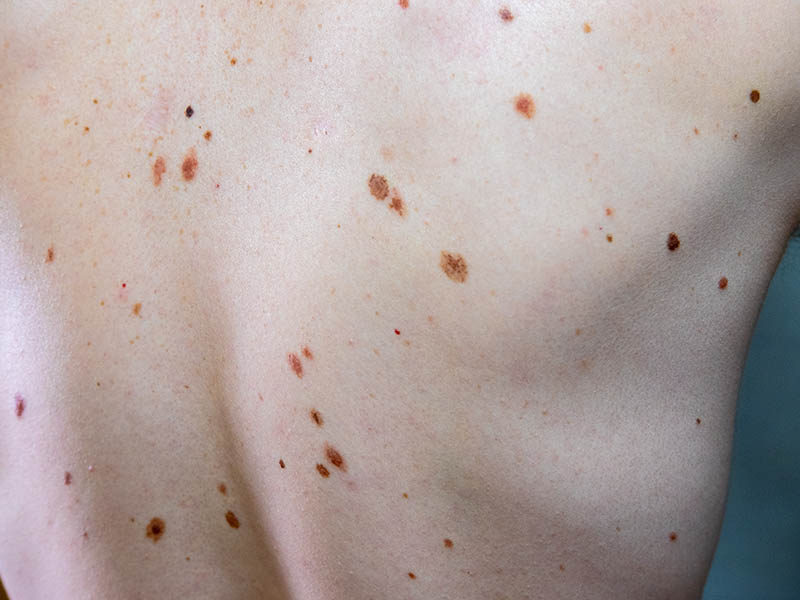
Atypical or “dysplastic” moles are usually irregular, odd-looking moles that can sometimes appear similar to a melanoma.
Most atypical moles do not become melanoma, but their appearance can overlap with melanoma. Having dysplastic moles can also indicate a higher overall risk, including melanoma developing elsewhere on the skin.
Monitoring and removal
A doctor may recommend dermoscopic photography for a lesion that is suitable for monitoring, with an individual follow-up interval. A suspicious or changing lesion may need biopsy or excision.
After biopsy, whether further excision is needed depends on the degree of atypia, the margins, the clinical appearance and whether melanoma can be confidently excluded. Studies supporting observation in some cases do not mean every dysplastic mole can safely be left without further treatment.
Your doctor will explain your pathology result and follow-up plan. People with many atypical moles may benefit from mole mapping, alongside clinical examinations.
References
- Hocker T, Alikhan A, Comfere N et al, 2013. Favorable long-term outcomes in patients with histologically dysplastic nevi that approach a specimen border
Journal of the American Academy of Dermatology volume 68, issue 4, pages 545-551, 1 April 2013 https://doi.org/10.1016/j.jaad.2012.09.031 - Rosendahl C, Grant-Kels J, Que S, 2015. Dysplastic nevus: Fact and fiction. Journal of the American Academy of Dermatology, volume 73 issue 3, pages 507-512, 1 September 2015 https://doi.org/10.1016/j.jaad.2015.04.029

MBBS, MA (Virtual Comm), Grad Cert Hlth Info, Grad Dip Comp Inf Sci