SKIN CANCER
Field treatment recovery guide
Follow your treatment-specific recovery instructions and contact the clinic if your reaction worsens unexpectedly.
- Redness, crusting and peeling are common parts of treatment
- Timing varies; reactions can build after a short course ends
- Contact the clinic if you are worried or symptoms are severe
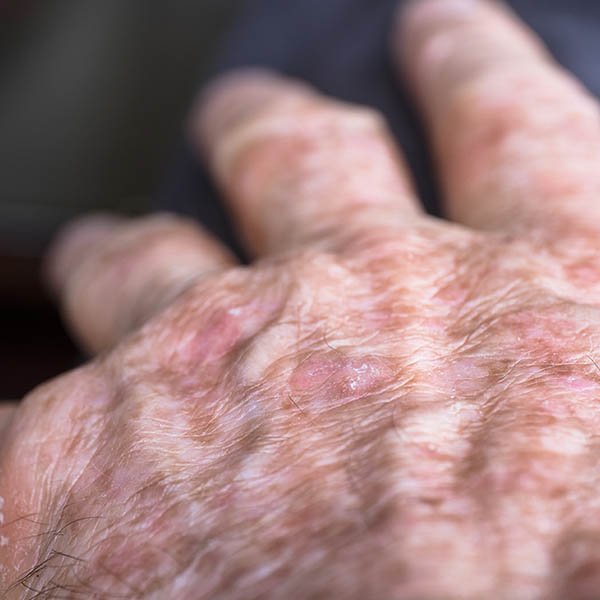
This guide helps patients having topical field treatment for solar keratoses revisit the advice given at prescribing. Follow your own written plan for the preparation, area, frequency and course. After PDT or fractional laser, follow the separate PDT or laser aftercare instructions.
What reactions should I expect?
Redness, tenderness, burning, itching, swelling, crusts or sores can develop within the treated area. Previously unnoticed patches may also become inflamed: field treatment addresses the whole prescribed area, not just individual visible spots.
Some people have discomfort that affects sleep; others worry that their reaction is too mild. A strong reaction alone does not mean an allergy or prescribing error, and reaction intensity alone does not establish treatment success.
The reaction can build after treatment finishes
With a short course of fluorouracil/calcipotriol, inflammation may continue to worsen for a couple of days after the course finishes. Hands and arms sometimes react more slowly. Do not add extra treatment days unless this is part of your doctor’s instructions.
There is no single recovery timeline for every preparation, body site or patient. Surface healing and residual redness may settle at different rates.
Managing discomfort
- Use the soothing ointment or moisturiser recommended by your doctor. Options discussed at the clinic include petroleum-based ointments, paw paw ointment, Bepanthen, E45 or Cicaplast; zinc-based products may also be advised.
- A cool compress can help discomfort.
- Paracetamol may help pain if suitable for you. Ask your doctor or pharmacist whether an antihistamine is appropriate for swelling.
- Strictly protect the treated skin from sun exposure.
- Avoid picking crusts or adding irritating skin products.
When to contact us
Contact the clinic if the reaction worries you, including if you feel very anxious. We aim to arrange a same-day review or phone consultation with the prescribing doctor where possible.
Seek prompt assessment for marked swelling, difficulty opening your eyes, symptoms affecting vision, fever, very painful or sensitive skin, or pustules/pus. A written guide cannot reliably distinguish an expected reaction from infection or another complication.
Can I pause treatment?
If you are concerned enough to pause a topical course, you can pause while arranging review. Contact us promptly for reassessment rather than deciding on a longer or different course yourself. If you stop early, return about a month later so your doctor can assess the result and whether another treatment is needed.
Contact and photographs
Call reception on 03 9098 7474. If you are very concerned outside clinic hours, you may use our website contact form. Do not wait for an email response if you need urgent assessment, particularly for possible infection or swelling affecting vision; seek an available medical service.
For follow-up of an area your doctor has already assessed or treated, reception may arrange a phone consultation. A photograph emailed before that consultation may provide useful context. This follow-up process does not provide diagnosis of a new skin condition from a photograph.
Review after recovery
Attend any review arranged for you. An extra visit may not be needed if treatment has worked and the area heals as expected, but unresolved crusts, ulcers or other lesions always need reassessment. Field treatment does not replace ongoing skin checks and sun protection.
Keep the written instructions supplied when treatment is prescribed, including the preparation-specific patient information, so you can refer to them at home.

MBBS, MA (Virtual Comm), Grad Cert Hlth Info, Grad Dip Comp Inf Sci