TREATMENTS
Scar remodelling injections
Steroid injections may soften raised scars and reduce itching, tenderness or discomfort.
- Flattens and softens raised scars
- Reduces redness, itch and discomfort
- Multiple treatments may be needed

Injections may be considered for raised hypertrophic or keloid scars, particularly when the scar is itchy, tender or uncomfortable. Your clinician will explain whether injections or another approach are appropriate.
There is often significant improvement after a single injection, although in most cases a course of several injections is required. Steroid injections are particularly effective for scars that are sensitive, itchy, or cause discomfort.
How many treatments are required?
The number of steroid injections required varies depending on the scar’s severity and response to treatment. Typically, patients may need anywhere from 2 to 6 sessions about 4 to 6 weeks apart.
After completing the steroid injection treatment, patients can expect reduced scar size and symptoms. The scar may become flatter, less red, and less itchy. However, it’s important to have realistic expectations, as the scar may not disappear completely.

MBBS, MA (Virtual Comm), Grad Cert Hlth Info, Grad Dip Comp Inf Sci
How it’s done
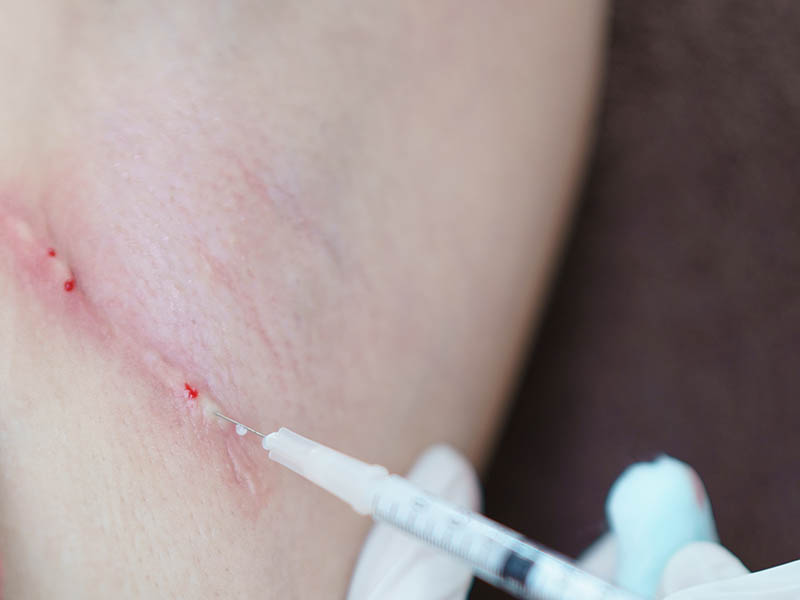
The procedure involves injecting triamcinolone, a steroid solution, directly into the scar tissue. If the scar is long or wide, several injections may need to be administered along the scar’s length or width.
The procedure normally stings for several seconds, but it is not painful enough to require local anaesthetic or numbing cream. Stinging settles instantly once the needle is withdrawn.

Side effects and warnings
Common side effects include pain at the injection site and temporary swelling.
Steroid injections can cause thinning of the skin, discolouration or the formation of small depressions at the injection site. This usually resolves but it may take many months. To reduce the risk of this complication, we prefer to administer smaller doses over several treatment sessions rather than attempt a single treatment with a larger steroid dose.

Other treatments for scars


Fees
See our assessment fees. The cost of scar injections and any proposed course will be explained during assessment before treatment.
Discuss treatment for your scar
A doctor assesses your scar and discusses suitable treatment options.
Book a skin condition assessment