SKIN CANCER CHECKS
Full body skin check
A thorough head-to-toe examination to identify concerning spots, including those you may not have noticed.
- Experienced skin cancer doctors
- Dermoscopy for detailed examination
- Clinical photography where indicated
- Typically 20–30 minutes

Dermoscopic photographs allow detailed assessment and support future comparison.
(Full-body mole mapping with photography of all moles is available as a separate service.)
By the end of your appointment, you will have a clear understanding of:
- Your overall risk of skin cancer
- Whether any spots are abnormal or suspicious
- Whether follow-up, biopsy, or treatment is recommended
- How often your skin should be checked in future
You will have ongoing access to relevant photographs, pathology results, and clinical advice via your medical record.
Fees and rebates
Consultation fees apply. Some consultations may be eligible for Medicare rebates.
If biopsy or treatment is recommended, additional fees may apply and will be discussed before proceeding. See our pricing page for indicative fee information.
Who should have a full body skin check?
Strongly recommended for people:
- With a history of skin cancer or pre-cancer (including melanoma, BCC, SCC, solar keratoses or dysplastic moles)
- With medical risk factors for skin cancer
- With significant personal risk factors or a family history (parents, siblings or children) of melanoma
- Who have used a solarium or tanning bed
- With medical conditions or medications that increase skin cancer risk
- With more than 100 moles
- With fair/white skin who are 40 or older
- Seeking reassurance that their skin has been thoroughly assessed and their risks explained
Not sure whether a spot is a mole or a freckle? Learn about the difference and when it needs checking.
People at higher risk (for example, those with a recent melanoma or multiple prior skin cancers) may be advised to have checks more frequently.
Why have a full body skin check?
Studies show that during routine full body skin checks, dermatologists and skin cancer doctors often detect cancers that have not yet been noticed by the patient. (Jiang 2021).
People with melanomas detected at routine full body skin checks tend to live longer than those with self-detected melanomas (Watts 2021).
Many skin cancers develop in areas that are difficult to see yourself, such as the back, scalp or behind the ears.
A full body skin check by an experienced doctor provides systematic examination of your entire skin surface, including hard-to-see areas, using magnification and specialised lighting that reveals early changes invisible to the naked eye.
Most findings during a skin check are benign and do not require treatment.
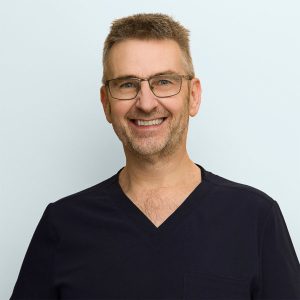
MBBS, MA (Virtual Comm), Grad Cert Hlth Info, Grad Dip Comp Inf Sci
How to prepare
Before your appointment
If you are a new patient, please complete our online registration form at least 24 hours before your appointment so we can review your skin cancer risk factors in advance
Avoid make-up and fake tan on the area being examined.
Make sure your skin is clean for examination and photography.
Any previous skin cancer pathology results
Copies of prior clinical or mole mapping photographs, if available
How the examination works
During a full body skin check, your doctor examines your skin carefully and respectfully, using dermoscopy to assess spots that may need closer attention.
We understand that a skin examination can feel personal. Below, we explain the overall approach we take — including privacy, consent, and communication — so you know what to expect before you arrive.

What happens in the appointment
-
Before the examination
We review your medical history and skin cancer risk factors, which you will usually have provided in advance via our medical history form. This helps us tailor the examination to your individual risk. -
Getting ready
The doctor will leave the room so you can undress in private. You will be asked to remove clothing and most jewellery (to allow full examination of the skin). We recommend that you keep your underpants on.
For bra wearers — whether to remove your bra is entirely your choice. Removing it allows a more thorough examination of the chest and back, but we respect whatever you’re comfortable with.
You can use a disposable paper gown or dressing gown for coverage during the examination. -
During the examination
The doctor will return and examine your skin systematically using a dermoscope, a medical instrument that magnifies and lights the skin to allow detailed assessment of spots and moles.
The examination may be done sitting, standing or lying down, depending on what is being checked. We examine the scalp systematically as part of every full body check. If you have thick or long hair, some areas may be more difficult to visualise—let us know if you’d like us to part your hair in specific areas of concern. -
Sensitive areas
Your doctor will always ask permission before examining sensitive areas. You can decline examination of any area. Genital examination is not routine unless there is a specific concern.Skin cancers are rare on the genitals, so this is not a routine part of the examination. If there is a spot of concern, please discuss it with your doctor during the examination.
-
Photography and discussion
Any spots that require closer assessment may be photographed using a dermoscopic camera. After the examination, you will be able to get dressed in private before discussing the findings with your doctor. -
Next steps
Your doctor will explain the findings, show you any relevant images, and discuss whether monitoring, biopsy, or treatment is recommended. Many spots are low risk and do not require any immediate intervention. - After your appointment
If follow-up is recommended, we’ll book your next check before you leave (or you can book online). You’ll have access to all photographs taken, along with a summary of findings and recommendations, via your patient portal.
If biopsies were performed, results typically arrive within 5–7 business days and we’ll contact you to discuss them.
References
Jiang A, Jefferson IS, Robinson SK, Griffin D, Adams W, Speiser J, Winterfield L, Peterson A, Tung-Hahn E, Lee K, Surprenant D, Coakley A, Tung R, Alam M. Skin cancer discovery during total body skin examinations. Int J Womens Dermatol. 2021 May 30;7(4):411-414. https://doi.org/10.1016/j.ijwd.2021.05.005
Watts CGMcLoughlin KGoumas C, et al. Association Between Melanoma Detected During Routine Skin Checks and Mortality. JAMA Dermatol. 2021;157(12):1425–1436. https://jamanetwork.com/journals/jamadermatology/fullarticle/2785614
Meet our team of doctors
Our doctors have extensive experience in the assessment, diagnosis and management of skin cancer, including full body skin checks, mole mapping, biopsies and procedural treatment where required.
Dr Chris Miller
Dr Chris Miller is an Accredited Skin Cancer Doctor in Melbourne CBD with advanced training in skin cancer detection, dermoscopy and surgical management. He performs full body skin checks, mole mapping and skin cancer procedures daily, with a particular interest in non-surgical skin cancer treatments and evidence-based sun-damage management.

Dr Sahar Shirkhanloo
Dr Sahar Shirkhanloo is a skin cancer doctor with a Master of Medicine (Skin Cancer) and over a decade of clinical experience. She performs full body skin checks, biopsies, excisions and reconstructive procedures at Spot Check Clinic.

Dr Kevin Sandhu
Dr Kevin Sandhu is a GP with advanced training in skin cancer medicine and a background in surgical training across general, vascular and plastic surgery. He performs skin cancer checks, biopsies, excisions and other surgical skin procedures at Spot Check Clinic.

Dr Meetali Kanagasundaram
Dr Meetali Kanagasundaram is a vocationally registered GP with a Diploma of Dermatology and additional training in skin cancer medicine. She performs skin cancer assessments, mole checks and in-clinic procedures at Spot Check Clinic.
Book a full body skin check
Skin cancers detected at full body checks are diagnosed at an earlier stage and are easier to treat., Button Book a full body skin check
Book a full body skin check